
How Can I Explain My Adult ADHD to People I Know?
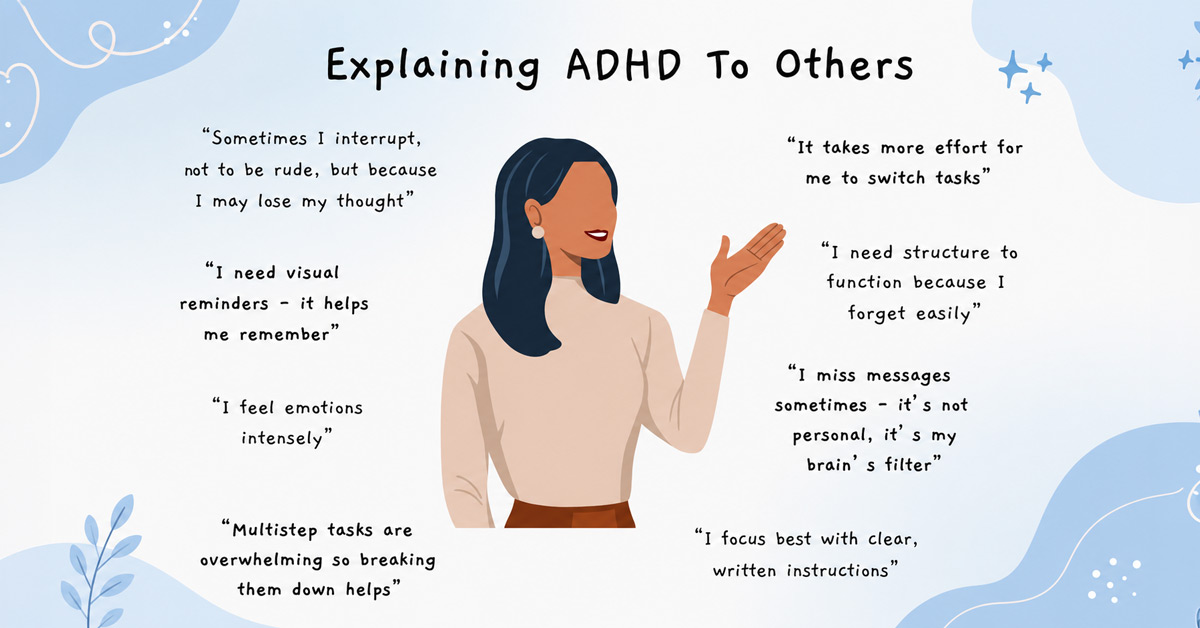
Living with Attention-Deficit/Hyperactivity Disorder (ADHD) as an adult can be challenging, especially when the people around you don’t fully understand what you’re experiencing. ADHD isn’t simply being forgetful, distracted, or disorganized. It’s a neurodevelopmental condition that affects how the brain manages attention, emotions, planning, and executive functioning.
If you’ve ever wondered how to explain your ADHD to family, friends, coworkers, or caregivers, you’re not alone. Honest conversations can help build understanding, strengthen relationships, and reduce misconceptions.
Start with the Basics
Many people still associate ADHD with childhood, but ADHD often continues into adulthood. You might explain it like this:
“My brain processes information differently. ADHD affects how I focus, organize tasks, manage time, and regulate my attention. It’s not something I can simply ‘try harder’ to overcome.”
Keeping your explanation simple can help others understand without becoming overwhelmed by medical terminology.
Explain That ADHD Looks Different for Everyone
Not every person with ADHD has the same symptoms. Some adults may struggle with:
- Forgetting appointments or deadlines
- Losing track of conversations
- Difficulty starting or finishing tasks
- Becoming easily distracted
- Hyperfocusing on activities they enjoy
- Trouble managing time
- Feeling overwhelmed by multiple responsibilities
- Emotional sensitivity or frustration
Sharing your personal experiences can help people understand what ADHD looks like in your daily life.
Address Common Misunderstandings
Many adults with ADHD hear comments like:
- “Everyone gets distracted.”
- “You just need to be more organized.”
- “You’re lazy.”
- “You don’t seem like you have ADHD.”
While these comments are often unintentional, they can feel dismissive.
You might respond by saying:
“Everyone gets distracted sometimes, but ADHD affects me consistently and can make everyday tasks much more difficult than they appear.”
Helping others understand the difference between occasional distraction and a medical condition can make a big difference.
Share What Helps You
People often want to be supportive but don’t know how. Let them know what works best for you.
Examples include:
- Giving one instruction at a time
- Sending reminders by text or email
- Allowing extra time to process information
- Being patient if you lose your train of thought
- Understanding that interruptions can make it difficult to refocus
Small adjustments can improve communication and reduce unnecessary stress.
Be Honest About Your Challenges and Your Strengths
ADHD brings challenges, but it can also come with strengths. Many adults with ADHD are:
- Creative thinkers
- Excellent problem-solvers
- Adaptable
- Passionate about their interests
- Energetic and enthusiastic
- Able to think outside the box
Sharing both sides helps others see you as a whole person rather than defining you by a diagnosis.
Remember That You Don’t Have to Explain Everything
You get to decide how much you want to share. Some conversations may be brief, while others may go into more detail. You are not obligated to disclose your diagnosis to everyone.
Focus on explaining what will help others better understand and support you.
Encourage Questions
Sometimes people simply don’t know much about adult ADHD. Inviting respectful questions can lead to better understanding and stronger relationships.
For example:
“If you’re curious about how ADHD affects me, I’m happy to answer questions.”
Open communication often replaces assumptions with understanding.
Give Yourself Grace
Living with ADHD means navigating challenges that others may not see. There will be good days and difficult days, and that’s okay. Learning how to communicate your needs is an important step toward reducing stress and building supportive relationships.
How HDE Home Care Supports Individuals
At HDE Home Care, we understand that every person’s needs are unique. Whether someone is living with ADHD, an intellectual or developmental disability, or simply needs extra support to remain independent, compassionate care can make a meaningful difference.
Our caregivers focus on person-centered support that promotes independence, confidence, and quality of life while respecting each individual’s strengths and goals.
Understanding begins with conversation. By helping others see what ADHD truly is and what it isn’t, you can build stronger relationships based on empathy, patience, and mutual respect.