
Dignity of Risk: Why Making Choices Includes the Right to Make Mistakes
Everyone makes mistakes. We choose the wrong job, spend money on something we later regret, stay up too late, try something that doesn’t work out, or make decisions our family and friends wouldn’t have made for us.
Those experiences are part of being an adult. They help us learn, grow, gain confidence, and better understand ourselves.
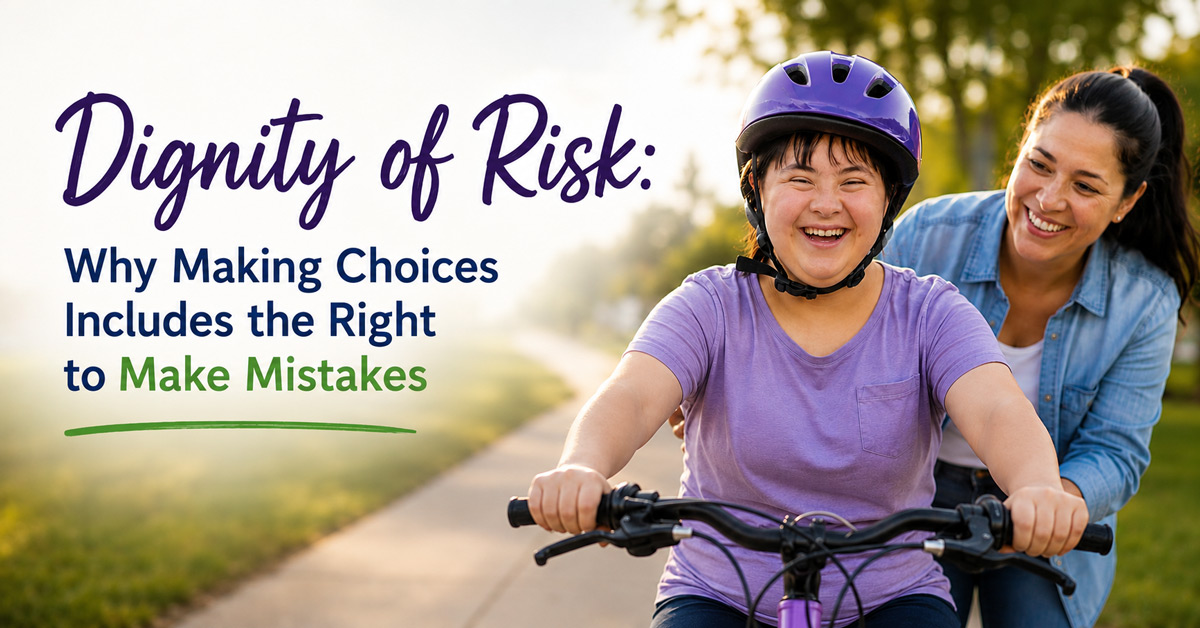
Adults with intellectual and developmental disabilities (I/DD) deserve those same opportunities. This idea is often called dignity of risk. The belief that people have the right to make their own choices and take reasonable risks, even when those choices may lead to mistakes.
At HDE Home Care, we believe supporting someone means more than helping them stay safe. It also means respecting their choices, encouraging independence, and helping them live a life that is meaningful to them.
What Does Dignity of Risk Mean?
When we care about someone, our natural instinct is often to protect them. For parents, family members, caregivers, and support professionals, it can be difficult to watch someone make a decision when we think we know a better option.
But protecting someone from every possible mistake can unintentionally limit their independence.
Dignity of risk means recognizing that adults with I/DD have the right to participate in decisions about their own lives. That can include choices about what they wear, how they spend their money, what they eat, where they go, who they spend time with, where they work, and what goals they want to pursue.
At HDE Home Care, our goal is to support individuals in making choices while providing the assistance they need to understand options and navigate potential risks.
Supporting independence doesn’t mean ignoring safety. It means finding a healthy balance between providing appropriate support and allowing someone to have control over their own life.
Mistakes Can Be Powerful Teachers
Think about some of the lessons you’ve learned throughout your life. Chances are, many of them came from experiences that didn’t go exactly as planned.
Maybe you spent too much money and learned how to budget. Maybe you took a job you didn’t enjoy and discovered what you wanted from your next one. Maybe you tried a new activity, weren’t very good at it, and decided to keep practicing or realized it simply wasn’t for you.
People with I/DD deserve opportunities to have those experiences too.
When someone is never allowed to make a mistake, they may also miss opportunities to develop:
- Problem-solving skills
- Confidence
- Resilience
- Decision-making abilities
- Greater independence
- Self-advocacy skills
At HDE, we want the people we support to continue building skills and confidence. Sometimes that means celebrating a success, and sometimes it means helping someone learn from an experience that didn’t go as planned.
Both are important parts of growth.
Supporting Doesn’t Have to Mean Taking Over
There is an important difference between helping someone make a decision and making the decision for them.
Instead of saying:
“No, you can’t do that.”
A support person might say:
“Let’s talk about what could happen if you choose that.”
Instead of automatically deciding how someone should spend their money, we can help them understand how much money they have, what something costs, and what they will have left afterward.
Instead of choosing someone’s activities for them, we can explain the available options and allow them to decide what sounds enjoyable.
This person-centered approach is an important part of the support HDE Home Care provides. Our caregivers can help individuals understand their options, develop everyday skills, participate in their communities, and make decisions while still respecting the individual’s voice and preferences.
The goal isn’t to control someone’s choices. It’s to give them the tools and support they need to make choices for themselves.
Finding the Balance Between Independence and Safety
Dignity of risk doesn’t mean every risk should be ignored. There are situations involving serious health or safety concerns, exploitation, abuse, or other dangers where additional support or intervention may be necessary.
The important question is whether we’re limiting someone’s choices because there is a genuine and significant risk or simply because we wouldn’t make the same decision ourselves.
Before stepping in, it can help to ask:
Is there an immediate or serious danger?
Does the person understand the possible consequences?
Can we reduce the risk without taking away the choice completely?
Am I helping this person make their own decision, or am I making it for them?
Sometimes a small amount of additional support can make an activity safer while still allowing the individual to remain in control.
Independence Looks Different for Everyone
Being independent doesn’t necessarily mean doing everything alone.
All of us rely on other people in different ways. We ask friends for advice, hire professionals when we need help, use technology to make tasks easier, and turn to family members for support.
For someone with I/DD, independence may include receiving assistance while still being the person directing their life.
Someone might need help reading a menu but still choose what they want to eat.
They may need transportation but decide where they want to go.
They may need assistance learning how to manage a budget but still have a voice in how their money is spent.
They may need support accessing their community but still choose the activities they want to participate in.
Needing support does not eliminate a person’s right to make choices.
How HDE Home Care Supports Choice and Independence
At HDE Home Care, we believe every person deserves to have a voice in their own life.
Our I/DD services are designed to provide individualized, person-centered support that helps people work toward their goals while maintaining as much choice and independence as possible.
Depending on an individual’s needs, HDE can provide support with everyday activities, building independent living skills, accessing the community, developing routines, pursuing personal goals, and participating in activities that are important to them.
Most importantly, we recognize that the people we support are individuals first. Each person has their own personality, preferences, strengths, goals, relationships, and vision for their future.
Our job isn’t to decide what someone’s life should look like.
Our job is to support them as they build the life they want.
Everyone Deserves the Opportunity to Grow
People with I/DD deserve more than safety and care. They deserve choice, respect, independence, experiences, relationships, opportunities, and control over their own lives.
There will always be some risk involved in living independently. That’s true for every one of us.
At HDE Home Care, we believe good support isn’t about removing every possible risk. It’s about helping individuals understand their choices, develop skills, build confidence, and experience the dignity that comes from having a say in their own lives.
Sometimes people will succeed.
Sometimes they will change their minds.
Sometimes they will make mistakes.
And sometimes those mistakes will become valuable learning experiences.
Because having the right to make choices also means having the opportunity to learn, grow, and become more independent.
That’s the heart of dignity of risk and it’s an important part of helping people with I/DD live full, meaningful lives.